How DAF actually works
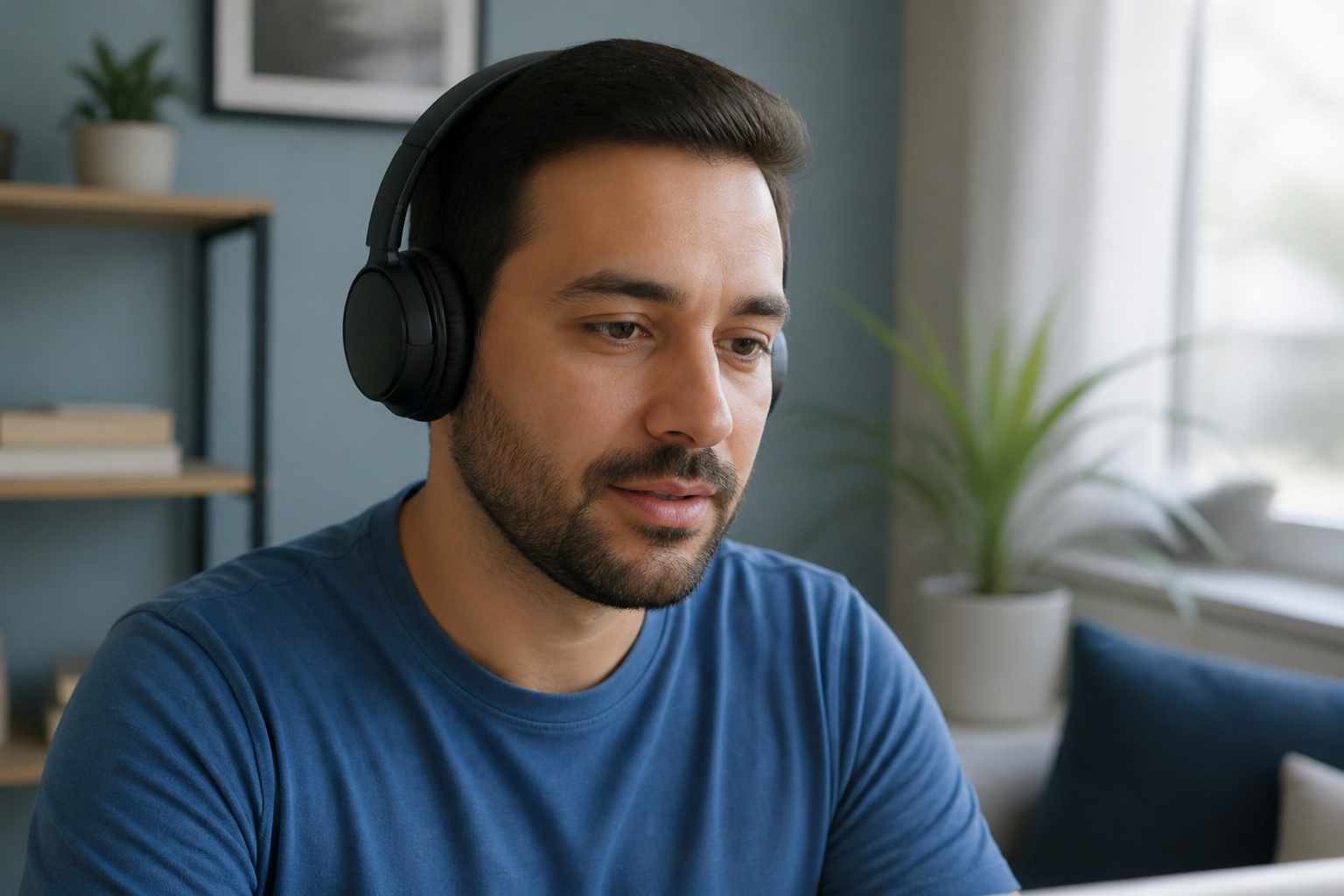
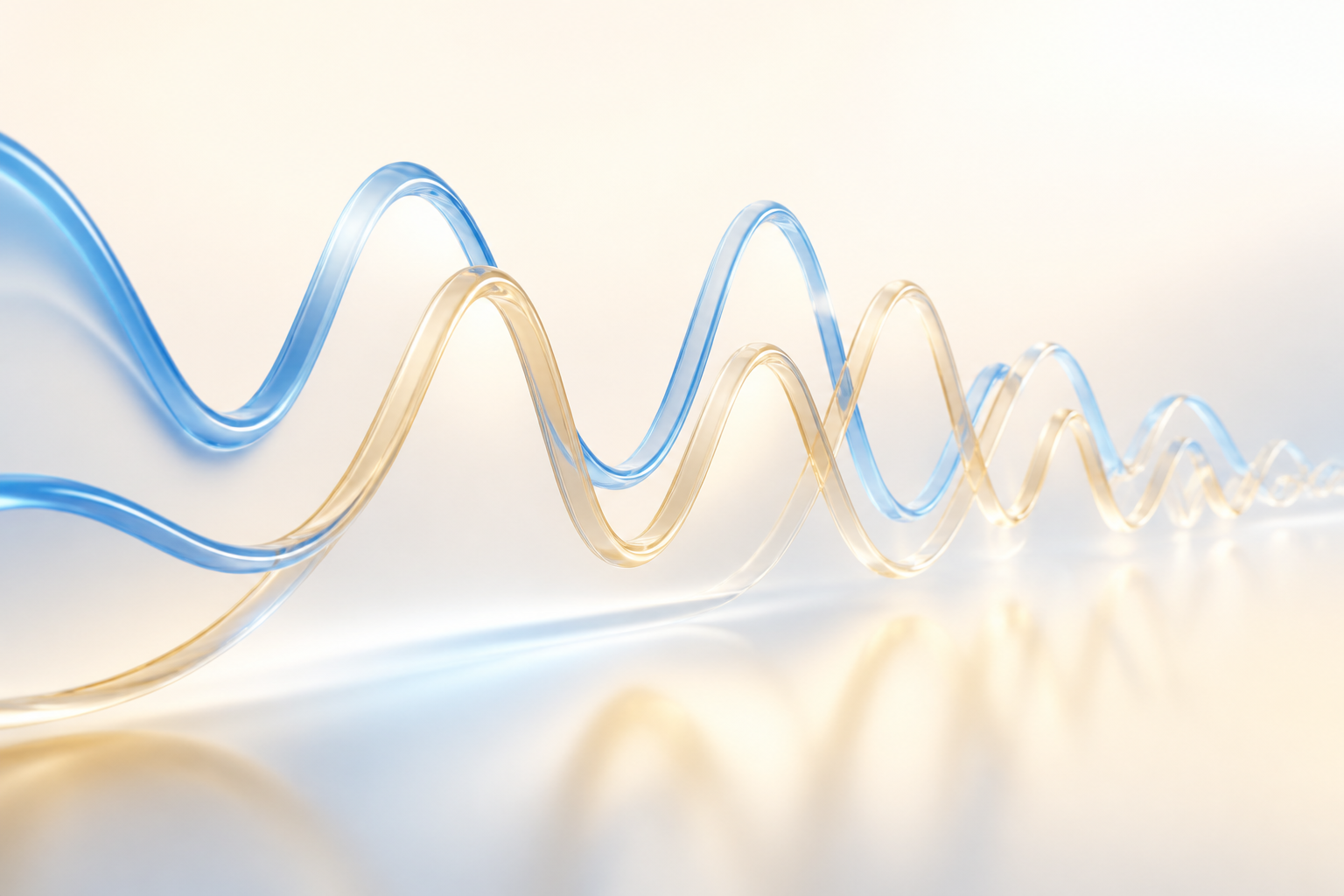
Your brain uses feedback from your own voice to help time your speech. Normally that feedback is instant. DAF adds a short gap, usually somewhere between 50 and 200 milliseconds, so you hear yourself just slightly after you speak.
That tiny mismatch seems to shift something in how the brain paces speech output. Nobody fully agrees on the mechanism. Some researchers think it slows speaking rate. Others think it changes how closely you're monitoring your own voice. Either way, the effect is real for a meaningful number of people who stutter, even if scientists are still debating why.
You can test this yourself with almost no cost, which is part of why it's popular. A phone app or a free browser tool can play back your voice with a delay in under a minute.
Does it help, and for how long?
For some people, talking with DAF running feels noticeably smoother. Speech comes out slower and more evenly. For others, it feels distracting, or does nothing at all. Response to DAF is individual, and there's no reliable way to know in advance which group you'll fall into. Trying it is the only real test.
The bigger limit is what happens when the feedback stops. Most of what research and clinical experience show is that any fluency improvement is tied to the device or app being active. Take the headphones off, and speech usually goes back to how it was before. DAF isn't something that trains your brain permanently after a few uses, the way learning a new skill might. It's closer to a pair of glasses: it can help while you're using it, but it doesn't correct your vision once you take them off.
That doesn't make it useless. A tool that helps during a phone call, a toast, or a work presentation has real value, even if the effect doesn't carry over to unaided speech.
Free online tools, apps, and wearable devices
DAF comes in a few very different price points and formats, and it helps to know which one you're looking at.
Free online and browser tools. A handful of websites let you test delayed feedback right from your laptop mic, no download or payment needed. These are the lowest-commitment way to find out whether DAF does anything for you at all. If a few minutes with a free online DAF tool doesn't change your speech, that's useful information before you spend money on anything fancier.
Phone apps. Once you know DAF is worth exploring, app-store options add more control: adjustable delay length, pitch shifting, saved settings, sometimes frequency-altered feedback layered in too. Quality and honesty vary a lot between apps, so this category deserves its own look. Our guide to choosing a delayed auditory feedback app walks through that decision if you're ready to pick one.
Wearable devices. Products like SpeechEasy sit in a different category entirely. These are small, in-ear devices built specifically to deliver DAF (often combined with frequency shifting) throughout the day, without needing a phone. They cost far more than an app, usually require a fitting through a clinic, and are a bigger commitment. They can be worth exploring for some adults, but they're a device purchase and clinical decision, not a casual download.
The honest way to move through this: try free online first, then an app if that shows promise, and treat a wearable device as a bigger step you'd discuss with a specialist rather than a starting point.
What DAF doesn't do
It's worth naming the myths directly, because some sellers stretch the truth.
DAF is not a cure. It doesn't remove stuttering. It doesn't rewire speech permanently after a period of use. Any percentage claim about how much it "fixes" fluency should make you skeptical if it's not tied to a real, cited study, and even then, individual results vary widely.
It also doesn't touch the parts of stuttering that live outside the sounds themselves: anticipating a hard word, avoiding a name, the tension that builds before you speak. Those are the pieces that speech therapy and everyday practice are built to work on.
DAF alongside therapy, not instead of it
If you're already working with a speech-language pathologist, DAF is worth mentioning to them. Some clinicians use it as one tool inside stuttering therapy, alongside techniques like easy onset (starting a sound gently instead of forcing it) or slower, more deliberate pacing. It's rarely the whole plan.
If you're not in therapy and stuttering affects your daily life, a certified SLP is still the right first stop for a full picture. The Stuttering Foundation's overview of electronic devices and apps is a fair, non-commercial place to get your bearings before buying anything.
Where DAF changes your voice in the instant you're speaking, everyday practice works on something slower: getting comfortable saying real sentences in real situations before you need to. That's a different job. Nejo AI is a conversation-practice app built for that side of things, letting you rehearse things like phone calls or introductions with an AI partner. It doesn't delay your feedback or alter your voice. It's for building comfort with words and situations ahead of time, which is a separate piece of the puzzle from what DAF does in the moment.
If stuttering is getting in the way of work calls, ordering food, or introducing yourself, pairing a DAF trial with actual practice and, ideally, an SLP's input gives you a fuller picture than any single tool can. You can read more on building a broader plan in our guide to how to stop stuttering, and on finding a clinician in speech therapy for stuttering.
FAQ
What is delayed auditory feedback?
It's a technique that plays your own voice back to your ears with a short delay, usually 50 to 200 milliseconds. For some people who stutter, this changes speech timing and reduces stuttering while the feedback is active.
Does DAF cure stuttering or help permanently?
No. DAF is not a cure. Most evidence points to its effect lasting only while the device or app is running. When you stop using it, speech typically returns to how it was before.
Is there a free delayed auditory feedback website or online tool?
Yes. Several free browser-based tools let you try DAF through your computer's microphone and speakers or headphones, no download needed. They're a good low-cost way to see whether DAF does anything for your speech before buying an app or device.
How do DAF apps and wearable devices differ?
Phone apps run on a device you already own and usually cost little or nothing. Wearable devices, like those in the SpeechEasy category, are dedicated in-ear hardware, cost significantly more, and often involve a clinical fitting. Apps are a lighter first step; devices are a bigger commitment.
How does DAF relate to speech therapy?
DAF is sometimes used as one tool within stuttering therapy, alongside techniques an SLP teaches directly. It addresses moment-to-moment speech sounds, not the anticipation, avoidance, or tension that therapy also works on. It's a complement, not a replacement.
How is Nejo AI different from a DAF app or device?
Nejo AI doesn't delay or alter your feedback. It's a conversation-practice app where you rehearse real speaking situations, like calls or introductions, with an AI partner. DAF changes how you hear yourself while speaking; Nejo AI helps you build comfort with speaking situations ahead of time.