The "easier word" trap
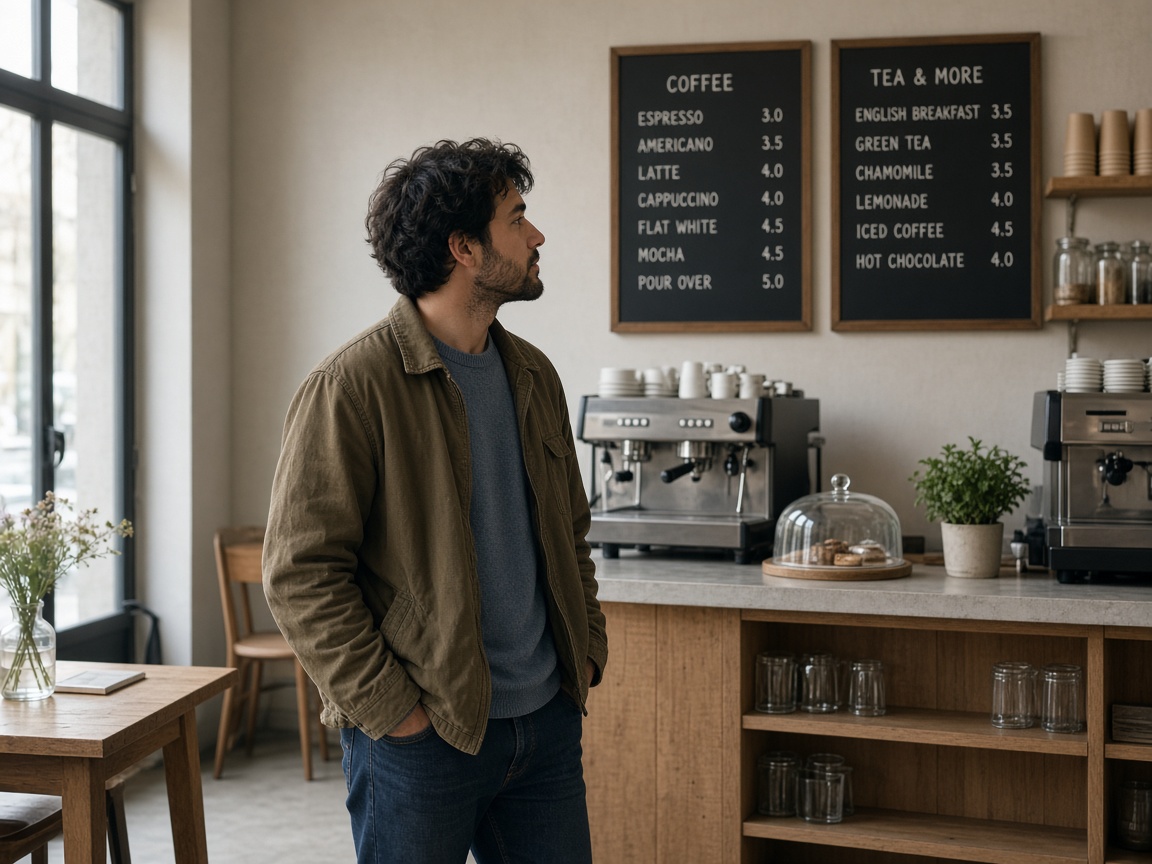
A lot of people who stutter learn to swap words on the fly. Wanted a large iced coffee, ordered a "medium" because "large" was about to block. Wanted a burrito, said "tacos" instead.
It works in the moment. But it adds up. You start shrinking your life down to whatever's easiest to say, one order at a time.
You don't have to do that here. It's fine to say the real word, even if it bumps or repeats a little. Cashiers hear all kinds of speech. Most of them just want to know what to type into the register.
Prep your line before you get in line
This part happens before you're standing at the counter, so there's no pressure yet.
Pick the exact order. Not "something with chicken", the actual item, size, and any changes. Decide it before you walk in or pull up.
Say it once, out loud, alone. In the car, in line, in the bathroom before you go in. Just once, at normal speed. "I'll have a medium iced coffee with oat milk." Hearing your own voice say the real words once tends to lower the jump when you say it again to a stranger.
Have a backup opener ready. If the first word is the one giving you trouble, you can start with "Can I get..." or "I'd like..." instead of leading with the hard sound. Small shift, same order.
None of this guarantees a smooth run. It just means you're not building the sentence for the first time under a stranger's stare.
At the counter
A few things that help in person:
- Face them, don't rush. You don't owe the cashier speed. A pause is not a hold-up.
- If you block, stay in it. Don't abandon the word and switch to something shorter mid-order. Ride it out, or use an easy restart, then keep going.
- Repeat back what you ordered if you're not sure it landed. "That was a medium, iced, oat milk" confirms it without you having to say the hard word again.
- It's fine to write it down. Some people hand over a note or type it on their phone and turn the screen around. That's not giving up. That's just choosing the tool that works today.
At the drive-thru speaker
Drive-thru speakers are their own problem: bad audio, a disembodied voice rushing you, no face to read.
A few things that make it easier:
- Say your order once, clearly, before pulling up to the box. The words are already loaded and ready, not built on the spot.
- Lead with the size or number first if the item name is the hard part. "One medium fries" instead of starting on "fries."
- If the speaker cuts you off or the person seems confused, just repeat calmly. They can't see you struggling, only hear a pause. Most workers assume static, not stuttering.
- Confirm at the window. You'll get a second chance to check the order landed right when you pull up to pay.
If the drive-thru genuinely isn't worth the stress on a given day, walking in is always an option. There's no rule that says you have to use the speaker.
Apps, kiosks, and pointing aren't cheating
Ordering ahead on an app, tapping a kiosk screen, or pointing at a menu board are all normal ways people order food now, stutter or not.
Using them isn't avoidance if you're choosing them because they're convenient, not because you're afraid of the counter. The difference matters for you, even if nobody else can tell.
A fair way to check yourself: if you'd use the kiosk even on a day you weren't worried about speaking, it's just a tool. If you only ever use it to dodge talking, it might be worth mixing in more in-person orders when you can, so avoidance doesn't quietly become the whole plan. The Stuttering Foundation's essay on ordering food gets into this tension well, worth a read if you want another perspective.
Practice the line before the real thing
The prep loop above works best when the sentence isn't brand new in your mouth. Saying an order out loud a few times before you're actually at the counter, to yourself, to a friend, or into an app, takes some of the newness out of it.
Nejo is a speaking-practice app built for exactly that kind of rehearsal. You can run through a line like "I'll have a medium iced coffee with oat milk" a few times before the real conversation. It's not a treatment and it won't remove a stutter. It's just a low-stakes way to hear yourself say the actual order before a stranger's waiting on it.

If ordering out loud is one small piece of a bigger pattern of nerves, our post on speaking when you're nervous covers more of that ground. And if it's specifically phone orders that trip you up, see stuttering on the phone.
FAQ
Why is ordering food so hard when you stutter?
It combines a few pressure points at once: a stranger waiting, a line behind you, and words you didn't get to plan out loud beforehand. Add a speaker or bad mic and it gets harder. It's not about the food. It's the live, timed nature of the exchange.
Should I only order words that are easy to say?
Not as a habit. Swapping to an "easier" item once in a while is fine, but if it becomes automatic, you end up shrinking your choices to avoid speech, not because you actually want the easier item. Saying your real order, even with some bumps, keeps that from creeping in.
What helps at a counter vs a drive-thru?
At a counter, you get a face and time to confirm the order after. At a drive-thru, you're working with a speaker and no visual feedback, so saying the size or number first, before the trickier word, and confirming at the window both help more than they do in person.
Is it okay to use the app, kiosk, or point at the menu?
Yes. These are normal ordering tools for anyone. They're only a problem if you use them only to avoid talking, every single time, out of fear rather than convenience. Otherwise, use whatever gets you the order you actually want.
How do I practice ordering beforehand?
Say your exact order out loud once before you're in line, in the car, at home, wherever. You can also rehearse it in an app like Nejo to get a rep in before the real one. The goal isn't a perfect run, just a warm-up so the sentence isn't brand new when it counts.